#427 From Pulpit to Pistol: Eric Robinson on Transitioning from Pastor to FBI Agent


 Spotify
 PocketCasts
 Castbox
 RadioPublic
 RSS Feed
 YouTube
 Apple Podcasts
 Overcast
 Castro
 iHeartRadio
 He spent 12 years saving souls from the pulpit, then the next 24 chasing sinners for the FBI. In this episode, we sit down with Eric Robinson, a former Baptist minister turned FBI Special Agent. Eric shares the fascinating and often harrowing story of his transition from the ministry to investigating drug cartels, public corruption, and national security threats. We dive into his 15 years as a SWAT operator, the reality of political corruption in cities like Chicago, and the frustrations of seeing criminals walk free due to political interference. Eric's unique perspective offers a rare look at the intersection of faith, law enforcement, and the pursuit of justice in a complex world. ⏱️ Timestamps 0:00 Welcome & Introduction to Eric Robinson 1:15 The Strange Transition: From Baptist pastor to FBI Special Agent 2:30 A Family Legacy: The Lutheran minister who preached in German during WWI 4:00 The Burden of the Pulpit: Why the stress of the ministry led to chronic headaches 6:00 Joining the FBI: Finding a job with "less stress" in law enforcement 8:00 9/11 and the FBI: How a background in Islam led to a career in the Bureau 10:00 Investigating Cartels: Working drug squads in Chicago and Toledo 12:00 The Reality of Affidavits: Sworn statements and the risk of vendettas 14:00 Witness Protection and Informants: The dangerous world of "snitches" 16:00 Reverting to Crime: Why some criminals can't stop even in prison 18:00 The Attorney General's Award: Recognition for civil rights and national security cases 20:00 Political Corruption: Investigating the sale of Barack Obama's Senate seat 22:00 The Frustration of Justice: When Washington D.C. interferes in local cases 24:00 Integrity in the Bureau: Discussion on internal corruption and the "crooked" percentage 26:00 The $900 Mistake: Why a 30-year career was thrown away for a small bribe 41:11 Building Rapport: Smoking cigars with a 15-year-old victim to get information 42:36 Where to Find Eric: His new book "Irreverent" and Preacher2Breacher.com 43:02 Outro: RoyCoughlan.com and the Awakening Podcast Network 43:16 End of Episode 🔗 Where to Find Eric Robinson •Website: Preacher2Breacher.com •Book: Irreverent: From Saving Souls to Chasing Sinners in the FBI (Available October) 🔗 About Your Host (Roy Coughlan) •Listen to this episode on Awakening Podcast: awakeningpodcast.org •Explore more podcasts: Find all podcasts at the PodFather Network •Website: RoyCoughlan.com •Need help running your business? If you are looking for a Virtual Assistant and get reliable support for your daily operations. •Virtual Assistants: VA.world •Private Networking Group: Learn about a Private Networking Group in 50 US States & 39 Countries with 640+ Members https://connectedleaders.academy/ •Brain Upgrade: BrainUpgrade.org #EricRobinson #AwakeningPodcast #FBI #LawEnforcement #SWAT #Corruption #Justice #Faith #Ministry #TrueCrime #ChicagoCorruption #NationalSecurity #RoyCoughlan #Irreverent #FromSavingSoulsToChasingSinners
Welcome to the Awakening Podcast. You can find all our episodes on Awakeningpodcast.org. He spent 12 years saving souls from the pulpit, then the next 24 chasing sinners for the FBI. Eric Robinson left the Baptist ministry to become a special agent, investigating gangs, drugs, public corruption, financial crime, and national security threats.
He spent 15 years as a SWAT operator and trained other agents in firearms and tactics. Two of his investigations earned the Attorney's General Award. His new book, Irreverent, From Saving Souls to Chasing Sinners in the FBI, comes out in October.
And today he brings the story straight to us. Welcome to the show, Eric. Thanks very much, Roy.
I appreciate it. No problem at all. So, I mean, it's a kind of, it's strange, a strange transition.
So I suppose, first of all, how did you come, become a pastor? Was it something in the family? Was there your father, somebody, a pastor? How did that come about? Yeah, I always went to church as a kid. It wasn't a pressured thing. It was just part of our lives.
Later learning that my great grandfather on my, on my dad's side was a Lutheran minister in South Dakota. And part of his story was he preached to an all German speaking congregation. This was during World War I. My predecessors in the FBI came to him and said, you can't be speaking only in German because we don't know what you're talking about.
He said, congregation won't understand me if I don't. And so he was put in a detention center for a number of months during World War I. So I've got a little bit of both sides going on. And then like 12 years you were doing that.
So what does it entail being a pastor? Well, I went through the kind of the usual steps of youth pastor, working with kids and assistant pastor, helping out in the church. And then in the mid nineties, the Baptist church where I was the assistant pastor said, hey, we'd like to plant a new church off of this one with a few core members. I said, I'd love to do that.
Went through the progression of training and then started a Baptist church in Western New York. And I was the only minister in that church. So for me, it was a difficult experience because there was no one to share things with.
I felt like I had to be a perfect model for everyone. So I can't enjoy bourbon, which I do. I can't smoke cigars, which I do, or I'm doing it back in the woods.
So the church we had was meant to be one of outreach and acceptance. I told that core group that if we're going to make a mistake, we're going to err on the side of grace. So if God's going to judge us, he's going to judge us for being too accepting.
And it was very successful. We did well by all accounts. People coming in, lives being changed.
But the difficulty I found over the years was I couldn't separate myself from people bringing me their problems and issues and me carrying them. And that resulted in me having stress related headaches for two years, every single day, every day. So I got to a place where I had to find a job with less stress.
So I joined the FBI. And I suppose like people don't realize that because if you're on your own people are telling you horrible things, which you kind of, you know, it's very hard to switch off. It's like even, you know, people going away down the rabbit hole of learning things, when they find out how deep and bad it is, a lot of people, they just quit and they don't want to research anymore and it gets them.
So I understand how that can be so dark for you. I'm glad you do. I mean, there's been thousands of men and women who were able to do this.
I just couldn't. And I found that in the FBI, those stresses, those difficulties weren't an issue. They weren't the things that I took home and thought about and perseverated on and worried about.
If a guy didn't get indicted, if criminals got away, yeah, I was upset, but I didn't worry in the same way that somebody's saying, hey, my marriage is breaking up. Well, that doesn't just not happen. Whereas in the FBI, guy gets away, I'm on to the next case and the world will take care of him.
Somehow he'll get caught. So, I mean, you've done a lot with the FBI, so maybe kind of take us through the career and what each kind of role was. Yeah, I started out, so my schooling originally was in Islam and outreach to Muslims.
And my application was in process when 9-11 struck in the United States. I assume the FBI looked at me and said, hey, well, let's take a chance on this guy. We've got an Al-Qaeda problem.
He knows how to talk to them. And so I go through that process. I'm assigned to Chicago, Illinois, and my first squad is a drug squad investigating Mexican and Colombian drug cartels.
So, I assume they thought, hey, this guy can work with Muslims and then they go, but we've got an opening here, so let's stick them there. So, I worked five years, drug cartels in Chicago, that's an issue, gangs for a couple of years, public corruption in Chicago. So, I'm hitting all the high points.
So, Chicago has these issues and I get to work them. And right off the bat, we were just doing wire taps after wire taps on criminals. So, I was getting to learn how to write affidavits, how to do surveillance, how to go inside houses and do searches.
And immediately coming from a place where I didn't know anything about law enforcement, I was getting an opportunity to get a quick lesson on this is the work of the FBI. It was fast paced. It was long hours.
It was many days. And if you're doing an affidavit, you're making a sworn statement against the criminal, but when they're drug cartels, is your details given to them and is there any risk to you? So, what I found is that usually the criminals understood they're doing what they do and we're doing what we do. So, the criminals did not carry a vendetta against the agents.
That could always happen. But if they had anger or animus towards anyone, it was usually the prosecutors who then would stand up in court and say these nasty things about them. Whereas that's all the information that we gave them.
But they just usually looked at it as like, I know I'm breaking the law and if you catch me, then you've done better than I did. So, yeah, writing those affidavits of sworn statements, they would get those things later. But the only time I found, I had two subjects who had wanted to threaten me.
One was a kid who had some mental health issues and was going to be a mass shooter. And one was a guy who has committed all these financial crimes. And he told stories about me sleeping with his wives one after another.
And he was more scared of me than I was of him. So, I didn't worry too much about him. What about when somebody needs to go into witness protection and they're talking about or giving names and things like that? Did you deal with stuff like that? We did not much.
There were occasions when, and that's where the informants come in, and they're the ones that really have more of a threat to them. Because I'm doing a job, they're choosing to do this. Sometimes they're choosing to do it because they've got jail time hanging over their heads.
But then the criminals looked at them more as traitors, as someone to get vengeance on. At the same time, those guys, the criminals knew that any actions they took against the informants were going to double up against them. So, typically speaking, if one of those criminals saw someone as a snitch, they would just separate themselves because that was their best avenue, rather than trying to harm them.
And when somebody becomes an informant, and usually they sometimes witness protection, they move to a different state or whatever, are you constantly watching them? Because you have a criminal, he's not going to go, all right, now I'm going to be a good boy. How many actually revert back to the kind of crimes that they were doing? Often. The one guy who was telling everybody I was sleeping with his wives, I got him on money laundering, and he spent a short time in prison.
While he was in prison, he was trying to run the same scams that he was doing beforehand. We had another subject who was a white collar criminal, financial criminal, was in the same prison as him. And he got out and said, he was telling me about all the yachts that he had and how I could invest in things.
He got out, kept doing the same things. And then occasionally there's ones, we had a drug case where I had arrested a man who was charged with possession with intent to distribute cocaine. And he said, guys, I'm not going to fight the charges.
I just want you to know, I didn't distribute, I used. That large amount that you're charging me with, I used and you probably saved my life because now I'm going to get clean. He said, I'd be dead for all the cocaine I used.
So the award then from, was it the attorney general or something like that? Yeah. The attorney general is our top prosecutor in the United States. The one who runs the Department of Justice and has policies.
So in the FBI every year, I don't know how many of these awards are given out, but in different categories. And so on one case, our investigation won the award for a civil rights case that we had in Chicago. And another one was for a national security case that we worked in Toledo, Ohio.
Then with corruption, like corruption internal, because I mean, if we look at a lot of the stuff that the government does, you know, like we see stuff that was released later, MKUltra and Operation Papercliffe, then they loaded them to so many different things. Like that doesn't change that's in there, but there's good people in there. Like, do you just kind of stay in your own lane or can you see what's happening? Oh, I mean, you see what's happening.
Much of what the public sees in corruption are the same ways that the FBI sees it. Like you, unless you've got that investigation going, you see it on the news, you hope somebody's doing something about it. And then occasionally you get to be part of that investigation.
I had a friend who had a case on local city council members in Toledo taking bribes. And so you think, okay, Toledo, Ohio is a fairly small city, maybe 250,000 people. And you think, wow, you know, we arrest four of the sitting city council members for accepting bribes.
That's going to have an impact and clean up the area. And it doesn't. It just makes- The next four come in with their hands out.
Exactly. They're like, well, we need to be smarter than those guys. They were stupid.
And so we go through that. One of the cases that I worked in Chicago, I was part of, our supervisor calls into the office, closes the door and says, I'm going to tell you something you can't tell your family. You can't even tell other agents.
And that was when he revealed we were going to be sitting on wiretaps for the sitting governor of the state, which was fascinating. The first time I was ever listening in on bugs as well. So not just the phone, but also a team had gotten into his office and put microphones hidden in there and they were terrible.
But sitting and listening to the governor try to sell, Barack Obama was a senator and was elected president and his seat was open. The governor was then by law to nominate someone for that new Senate position. And by what he said, he's got something golden and he's not just going to give it up for free.
So attempting to sell a Senate seat. And again, to your point, get a conviction. I forget how many years it was, many years that he got, and then president Trump just pardons him.
So we do what we can and move on to the next. And how frustrating is it for you when you see, like everyone has seen the crime now, I think in the last, since lockdown, people woke up a lot more and they're seeing so much crime is going on and nothing happening. Like say Bill Gates and all, I mean, we know the horrible things they've done or even big corporations, but these big corporations are run by people and you know, they're pulling the strings.
Like is it boiling your blood as well, knowing that this kind of, they're just getting away with it. And it's like, they're so big. Oh, absolutely.
And then here's the difficulty, which is most agents just want to work what's in their area. They just want to serve the community. And then once you start getting into situations that touch other people, you know, the ones that you mentioned, that's when folks from Washington DC get involved.
And that's when you are no longer in control of your case. And people start telling you what you can and can't look into, and maybe you should shy away from this. And that doesn't happen often, but once you're beyond just arresting a drug dealer, everybody wants him off the street, arresting a sex offender, everybody wants him off the street.
But now you started getting into the sex offenders who have high positions in companies and politics, then now folks are telling you, you're not looking at that. But the most frustrating part of working in the FBI, and any agent will tell you this is, here's 10 guys I want to indict. You take it to the prosecutor, prosecutor looks at it and says, well, we're going to indict these seven.
And so now you have three people that you know, for a fact, unquestionably have broken the law, but we're not going to charge them. And that would happen often, whether actually indictable or people you know, are just involved in the crime, but not criminally liable, just assisting. So it's an aggravation to see, here's criminals and nothing happens to them.
With, I mean, police in lots of countries, I know it happened in Ukraine, in Russia, even in Ireland. I mean, we know there's a drug dealer in an area where I grew up and you see the police calling there, your man's still trading there. So he's obviously giving brown envelopes to the boys.
How much of it is going on in the FBI? Because if you're arresting the drug dealer and you come across the money, what percentage is crooked? Because with the police, there's definitely a high percentage. Yeah. Well, I was fortunate not to witness much of that.
Of course, there was a great atmosphere in the FBI, once I got in, this is how we do things and we do it right. We do it well. And I was glad to be a part of that and seeing right off from the beginning, we're going to follow the law.
I would even see agents and myself discuss, not only are we going to follow the law, but is this right to do? We could, but should we? However, I had a case come to me where one of our task force officers, so he was a sheriff's detective who was assisting, sitting on our joint terrorism task force. He was called to a crime scene and it was a drug dealer who had shot his girlfriend and killed her. And he's called because he's a homicide detective.
He gets there, they hand him an envelope of $2,700 that was taken off the drug dealer and everything's on camera. Protocol was not to count money at the scene, which is common because you and I sit down and we do it in a hurry. Maybe we come up with a 2,950 and now it comes back in a calm count, 2,700 and now we had a problem.
So you just say, unknown amount of money. However, one of the young deputies broke protocol, turns on his body camera, calls someone else over, turns on their body camera and they count it on camera, put out over the radio the amount so the dispatcher knows. But this task force officer didn't have his radio on to hear this.
He gets there. So everything is on camera with chain of custody, other than 10 seconds when he takes him back to the office. And then he goes into his office and there's 10 seconds where we don't see it.
$900 comes up missing. And the question that everyone had was, why would somebody throw away a 30-year career over $900? And the answer was, that was the last $900 probably. Exactly.
He got away with it a hundred times or whatever. Yeah. And the discussions we'd have, I'd ask other agents, hypothetically, how much money would you need to get to ruin your career, your reputation, to risk it? And the amount is just so high that most people would say, there's no amount.
I couldn't do it because I wouldn't feel right. So thankfully, the Bureau hires largely good people like that who say, there's no money worth it for me to not be able to look at myself in the mirror. A lot of the stuff, because I'm trying to read a lot of things on health and everything, and FDA, like CDA, they're as corrupt as you get.
And what they're doing is they're attacking natural health and stuff like that. And you see the FBI going in and doing that. I mean, you're not stupid.
You must know that sometimes they just want to take out the people that are curing diseases, as opposed to big pharma, who's killing people and just making them on drugs for life. How do you navigate that one? I've said this many times. The last thing that an FBI agent wants is a Washington DC area code phone number showing up on their phone.
There's a saying of big cases, big problems, little cases, little problems. And most guys just want to do, except this is my small town, this is my community. I was in Chicago, big city.
You can have big cases, but mainly you just want to get that guy and that guy. And once it starts getting into, we're going to investigate an entire industry or get into huge details. There's not a lot of agents who are looking for the limelight enough that they want the headache that goes along with that.
I've had some big cases that have significant impact, but they weren't big in the sense of somebody upstairs. It matters to them enough where we're having an impact just in our area. So I was fortunate to stay away from those.
With a lot of the films and things like that, usually you'd see it in the police force, but there's a scream in the military. Is there any of that kind of eagerness and just kind of raising people in the FBI? Oh, there's plenty of ego. FBI agents are very entitled.
I had to combat that myself of, I deserve this. But for the most part, the things that you see where the FBI comes in and takes over a case is absolutely untrue. We depend, I say we, the FBI, I'm out now, depends heavily upon local police for their tips, assistance, task force officers working with us, and FBI management in a division, in a city, their highest priority is having a good relationship with the chiefs of police and the sheriffs because they know how much we depend upon them.
So especially like cop to cop level, almost always getting along. I have a case, oh, you're looking at this guy too. And then you and I are coordinating on how can we best do this? You're saying, hey, let me share you information or informants.
I'm saying, here's some technology. And we're just looking to see who can get a better hit. How can we get this done? And so many times cops would just say, hey, man, you can do more federally.
You take this, let me know how I can help. Or we're coming to them and saying, look, if you get state paper, search warrant, you can do this quicker. I'm going to give this to you.
And, you know, I get stats, you get stats, everybody's happy. Bad guy goes to prison and everybody works well together. What about when you, you know, you catch a big boy, is there a kind of celebration? Is there a feel good factor? Oh, absolutely.
Yeah. You know, I had a case once where in a, I didn't inform him who was involved in white supremacists. So he was always online.
He calls me one day while I'm doing errands on a Saturday and he says, hey, I've got this kid who's threatening to kill Muslims and he's going on about it. I'm like, yeah, yeah, yeah. Same story.
Like these stories are all the time. And then he says, yeah, but he's, he's already put out a scouting video of where he's going to attack and he's got a deadline for it. It's noon tomorrow.
And I say, well, let me pull over now because now I'm interested and I take notes. And in a 24 hour period, we had emergency disclosures, search warrants, getting information so we can identify the kid. And in that time at noon the next day, I'm sitting down to lunch with my family and I finally get an email after all these overseas calls and emergency disclosures where they say, hey, we caught the kid.
He had a balaclava on. He was heading out the door to carry out the attack. And that's one where it's, it's a small thing.
I didn't make headlines. The kid was underage. So it's not like some massive leader of a white supremacist group, but then, you know, Pat's on the back.
You guys did something noble and making sure the informant knows, Hey, all the way up the chain, these guys are saying you did an amazing job and I'm making sure he feels good about the work that he had done. Excellent. And what about crimes done against children? Because, I mean, it's a dark one.
There's a lot of terrible things going on. And, you know, unfortunately the powers that be, they're big into, you know, pedophilia, like, and obviously they're protected. And I've even heard of situations because we had a police guy from the UK and sometimes what's happening is when somebody's being abused, they report it, they put them in the asylum or they arrest them when it's somebody high level, which imagine like how that feels, but like what kind of situations did you experience? Yeah.
For the, well, I would say for the most part, almost exclusively the men that we were going after, and they were almost always men were like, they hide themselves. It was singular. It was an individual.
I had a buddy who had a case on a dark web website that shared in these images and videos. And that was a massive takedown. That was a bureau-wide case.
But for the most part, we're going one-offs that, you know, here's a guy who's trading this material. And so we go after him. What they've gone to now in the bureau is, you know, here's an undercover online and he's claiming to be a parent who's offering up children to trade that you can come and assault them.
And then you'll let him assault your children, which is, you know, just vile. It's as dark as you can think of. And then when we set up those things, you'll see so many times of a car running through a parking lot slowly, you know, thinking about what's going to happen, wanting to do it, but then thinking this could be a setup, you know, and they'll circle back and they'll wait.
And sometimes they'll leave. Sometimes they come back, you know, and here's this guy, you know, this is the moment where he's getting up the courage to do his dark dream. And it's so often it's just that one guy, but he's engaged as much as he can with many others.
And unfortunately, like what I've learned as well is, you know, like the protective services there, I don't know if it's happening in the States, but I presume it happens everywhere. It's happening in the UK and they're kind of letting, you know, like there's a lot of rape gangs in the UK, a lot of Muslims that are actually doing that, they're coming in, but they're obviously getting paid to do it. Like is that stuff going on in the States as well? We haven't seen that, at least not in the areas where I was working.
I mean, we would have, when I was working crimes against children in Toledo, Ohio, our mandate then, you know, we had those people who are doing the computer crimes and images and videos. And then our mandate was working to rescue teenage girls or boys, but we had girls who were prostituting themselves. And then a pimp would come along and manipulate them.
And the difference between them and you and me is you see a 16 year old girl in this situation, you want to help her, where they go, oh, this is a great money-making opportunity. So those pimps, what we had seen were sometimes they were in communities, they were by themselves, but they may be joined with others. They could trade girls back and forth, but they're part of a group that was fostering that mindset, giving directions on best practices to manipulate the girls, get the most money out of them.
What to be careful of. We would see some online forums of discussing, hey, this, you know, this gal's underage, stay away, or this one stole money. So we didn't see those groups that you're speaking of, but we saw different, like the groups of the men involved in the prostitution rings, not as a gang, but occasionally collaborating with each other.
And do they, are they prosecuting the girls, even though usually they're, you know, they're trying to get away. Sometimes they're abused by their fathers and they're just trying to get away and it's the only way they can survive. Do they, or do they try to give them help? Oh, so the difficulty is, and I remember the first time when I came onto that task force and we saw a girl that we believed to be underage targeted her to, for a sex act for the purpose of arresting the pimp.
And so we get the pimp. And I remember thinking, now what? Because now we have this 15, 16, 17 year old girl, and our job is to bring justice and that's on the pimp, but what do we do with the girl? And the difficulty is we don't want to arrest her. We don't want to send her to juvenile detention because she's a victim.
She did break the law because promoting prostitution is against the law, but we don't, we want to get her help. And so the FBI worked best when we had a coordination with some nonprofit groups, charities who might say, you know, Hey, here's a 40 year old woman who used to be in the practice herself. Now she's out.
Now she's got some funding. She's got a couple beds. She talks to girls, you know, has group sessions, but we needed to have that next step to offload them.
And then sometimes we did arrest them because that was the only safe place. If we sent them back to that foster home, she's just going to run away again. You know, so we had to separate those girls from that practice and from those men sometimes enough until they could get their heads straight and get things figured out.
So yeah, it was unfortunate, but it was our aim to not arrest them. And like sometimes when they're going to foster homes, they're putting them into abusive foster homes and it's like all orchestrated, you know, because I know that happens in the UK. Like it's incredible that that happens.
I mean, like when they catch people doing that, what exactly do they do to them? Because it's, you know, if you get two, three years, they're not going to change, you know, they have that, you know, their attraction, whatever it is, an illness. I don't know what you can define it as, but it's not right. Like, you know, castrate them, I don't know when they're abusing people, but like what happens to them when they like, say the foster parents that are bringing in kids and destroying them and then they're taken off, but they just keep feeding them because whoever's in charge is doing it.
Thank you for expressing my frustration. I mean, we, like we, and this was part of like, so I said in ministry, I would get these headaches in, in law enforcement. I, I, my job was just to recognize this is all I can do.
And we would try to do more, but that's limited too. And maybe this is callous, but there's a point where it's beyond what the FBI or what the police can do. So, you know, we weren't just arresting the guy and then kicking the girl and not caring.
We're working with victim coordinators, social workers, but you know, there's a point where this is all I'm mandated to do. I'm mandated to bring justice to arrest people and set things up. And then honestly, you know, for mental health sake, just walk away because I can't fixate on, you know, the kids not sleeping on my couch.
You know, the parents, you know, I'm not going to bring street justice to these abusers. You know, you'd hope that they're going to get better, but so many of them, like they were armed when they were young and now they're acting it out and it is a mental health issue. And I'd been around some of the pedophiles who, you know, it's mandated, they go to groups.
Sometimes that helps, sometimes it doesn't. You know, but now we're just, we just have our eyes open for when they get out next time around, let's see who, what happens. But that group that goes online and tries to sting the guys trading in underage material, you could do an arrest a day if you wanted to, except for the time that it takes to set up the operations, write the affidavits, go to trial sometimes.
I mean, you could just have a rotation, just hit one a day. They're out there all the time. It's when people open up, you realize the amount of it that's happening.
Yeah. Yeah. And, and we didn't have to tell them that they're disgusting because I'd run into a few of the sex offenders who, you know, had an attitude.
They might've been sociopaths, but most of them were broken men who knew they were disgusting and knew this day was coming. They just, as you described, had a compulsion. I mean, they enjoyed it, but they couldn't help themselves and they knew, they knew how awful they were.
So I didn't have to tell them that. And those are the ones that would, I had one guy confess, like we hadn't even finished the sweep of the house to clear it for bodies, to make sure there's nobody else there. We got into the second room and he was confessing.
He goes, you're here for the computer, right? And I'm like, yeah, hold on a second. We still got to do our job. The book then, like, is it kind of covering the stories we're discussing or is there a kind of team to it? Oh, the theme is yes, yes and yes.
So the theme is what happens when you take a Baptist pastor who's never handled a gun before and you put them in an elite law enforcement agency for 24 years. And so that thread runs throughout of the fascination I had all throughout my career of this is amazing that I get to do this. And I could get on the phone right now and call up any buddy of mine in the FBI and say, hey, tell a great story.
And he's like, oh, which one do you want to hear? So these investigations we get to be on many times are just, they're remarkable. You get to see what humans do. I write about some of the things that we see when we have access to every corner of a person's house and their phones and computers.
But also, yeah, here's an investigation. Here's something that was significant. Here's another one.
And then following on with what we call in the military and law enforcement and after action review, which is considering, okay, now you heard about that investigation and what happened. This is why it worked. This is how we almost screwed up.
This is what happened in spite of ourselves. And then a little more of the story as it finishes up of what took place. So it's a look inside any agent's career of what I got to do.
And it's going to be the same for so many others. But I think looking into that, people, they get amazed like, wow, this guy's just like me. He's nothing special, but he got to do some special things.
And when is it that you actually retired from the FBI? I retired on January 16th. So I'm a few months in and I'm enjoying not having late night calls from informants or 1 a.m. wake-ups for a SWAT operation. And I mean, obviously the book, it's coming out in October, I believe, and you'll be doing promotions.
But what's the future for you? Do you know what you're going to be doing? You're going to do more books, good speaking engagements. What's the plan? Some speaking off of the book. I've already got on my phone a list of, oh, those were fun stories.
Here's some other ones that I didn't think of. So there's a lot to it. I was speaking with a colleague who worked with these crimes against children and just commenting to her how agents just have these stories.
And she was affirming that like, yeah, you could tell this one, you could tell that one. And there's so much that goes on. So getting that chance to speak up, I think give people some insight into what the FBI does.
I work with some remarkable people, very talented, and yet most of them are just good citizens trying to do what's right. I've had a few people from the military on the show and they do books, but they have to pass it through to make sure everything's okay. Is it the exact same for yourself that you're not disclosing too much information? Yes.
I just emailed the Bureau yesterday to say, hey, what's the progress here? So they've had it since early February and there's a review process. And they said now it's sent off to a subject matter expert. And I think, well, you guys are like the FBI is subject matter expert.
I think what they did is they sent it to our chief division counsel, who's an attorney for the FBI to review to say, hey, does this seem right? The things that he's talking about, is there anything exaggerated here? So yeah, they've got to review that. Then typesetting. Oh, I'll show you.
I've got the book cover. So in the meantime, got to go through the process of, hey, let's get the book set up. We can do the cover.
We can do some of the copy editing. So that will be the cover right there. When you get a professional photographer, they can make you look good.
I suppose let's just kind of finish up maybe. One, the worst that you've witnessed, the worst. And then give me something that was actually the best feeling good factor that you've had.
That's good. I won't tell you the worst because I've learned from being on podcasts, when I tell the worst, it's a little too worse. Not for the awakening.
Oh, really? Yeah. There's a lot of bad stuff that's have to be shared here. So you're good.
All right. Here we go. For those who don't want to, they can pause and then pick it up in a few minutes.
So naturally it was a child pornography distribution case. We get called to the residence. We're doing a search warrant and arrest the guy.
And we had a triangulation of things happening. He was being interviewed. The forensics team was going through his phones and I was searching in his closet.
And I pull out of his closet, a backpack, and I start pulling things out of the backpack and there's rags in there. There's tape, there's plastic bags and some rope. And I thought, man, this is this guy's go bag that he uses to go assault in person, which is, that's a big deal because it's one thing to be trading in these images.
Another thing to offend in person. And then at the bottom, I pull out a pair of very soiled men's underwear, very soiled. And as I see that the guy's going through his phone, see photos, and he makes a confession and it all comes together at once that he didn't use that bag to offend.
He used that bag to plug public toilets so that he could do what he referred to as poop harvesting. So he would clog toilets and then he would go back later and retrieve the defecation so that he might consume it himself. He also would wrap it in Saran wrap in a certain cylindrical shape, put it in the freezer, and then use it to insert it into himself on the other end.
And so in the discussion afterwards, I was talking to him and he said, yeah, I got into pornography on the internet when I was 12 and just kept going down, needing more and needing more. And I remember thinking, yeah, that's really young and I can see how that might go. And then I realized now 12 is when most boys are introduced to pornography on the internet.
So God help us if that's a, there must've been some type of kernel in his head where the viewing of those images just released that bacteria. And now, you know, he had to go that way. But whenever agents tell stories and they're like, Oh, this disgusting thing happened.
I'd say, I'm gonna let you finish. I'll let you finish. And then, and then I'm going to tell mine.
So that was, that was one of the worst things that I had seen. But, you know, one of the best was not the significant big cases. It was the individual ones where I got to work with just a victim on one case.
And so one that kind of stands out a little bit is a time that my partner and I, Laura, we're driving around a 15 year old girl who was who was a sex worker. And I'm trying to build rapport with her and convince her to show us as we drive around the neighborhood, what are some of the houses she went to, to carry these acts out. And she was stubborn as many of these girls were.
And she goes, I could use a cigarette and she's 15. So, you know, she shouldn't be smoking, but she also shouldn't be having sex with strange men. So I tell her like, I've got some cigars.
And so here's my partner looking at me, giving me the side eye as I'm smoking cigars with a 15 year old prostitute in a parking lot. But damn, if it didn't, you know, reach her like this is not how she expected to be treated. Like here we go.
You know, this guy is cool. I'm like, you know, later I said, Laura, come on, she's going to get a cigarette anyway. And that is not the worst thing in her life.
So we got what we needed. We found some guys. So having those impacts on individual victims usually meant the most to me.
Yeah. Excellent. Oh, fantastic.
Charlie enjoyed the conversation. You might let the listeners know where they can find you and you might just mention the name of the book again. So when it does come out, obviously you can forward on the link to me and I'll make sure I'll update the show notes to have that.
But yeah. Absolutely. So the book comes out in October.
It is called Irreverent from Saving Souls to Chasing Sinners in the FBI. Telling my story of exactly that. And if you want to find me, the best place to go is my website.
Ready for this, Roy? It's preacher to breacher dot com. People will remember that. Yeah.
But yeah, I'll make sure I put the links on the show notes and the audio and the video. Thank you very much, Eric. Thanks so much, Roy.
Appreciate it. No problem. So that's all for the Awakening Podcast.
You'll find all our episodes on awakeningpodcast.org. Find everything about me, scan the QR code or go to roycoughlan.com. You'll find all the different things I'm doing. And if you're looking for virtual assistance, go to va.world. Sure to give us a thumbs up, five star rating, maybe share with three friends and come October when you get Eric's book, make sure you do the same. Give him a five star rating because it really helps.
It shares it to more people. Until next week, take care.

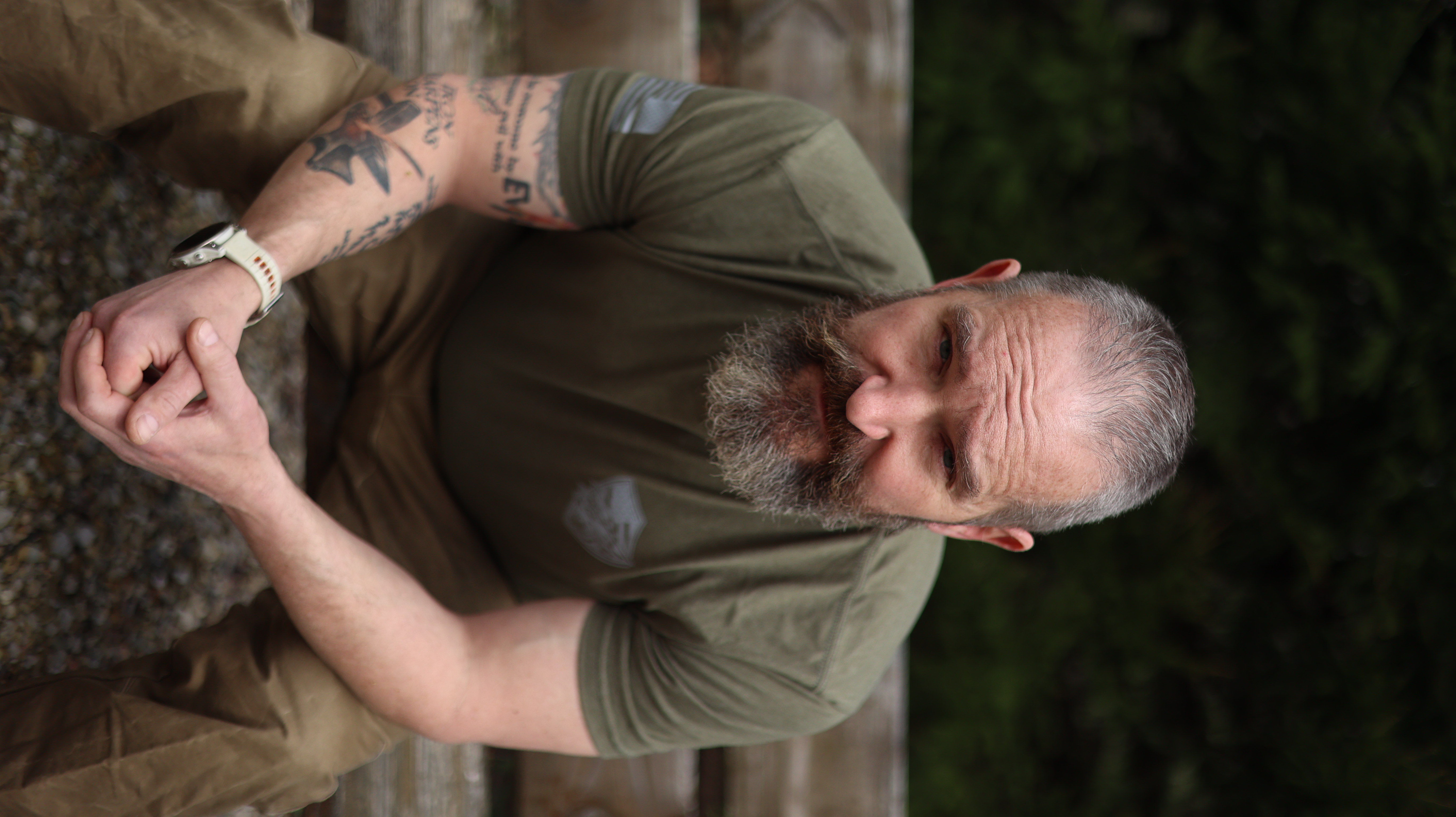
Author, former pastor and FBI special agent
Eric Robinson spent 12 years in Christian ministry before leaving the Baptist pulpit to join the FBI, where he served for 24 years, investigating drugs, gangs, public corruption, crimes against children, financial crimes, and national security. For 15 of those years he was a SWAT operator and firearms and tactical instructor. His book, "Irreverend - From Saving Souls To Chasing Sinners" comes out in October.